

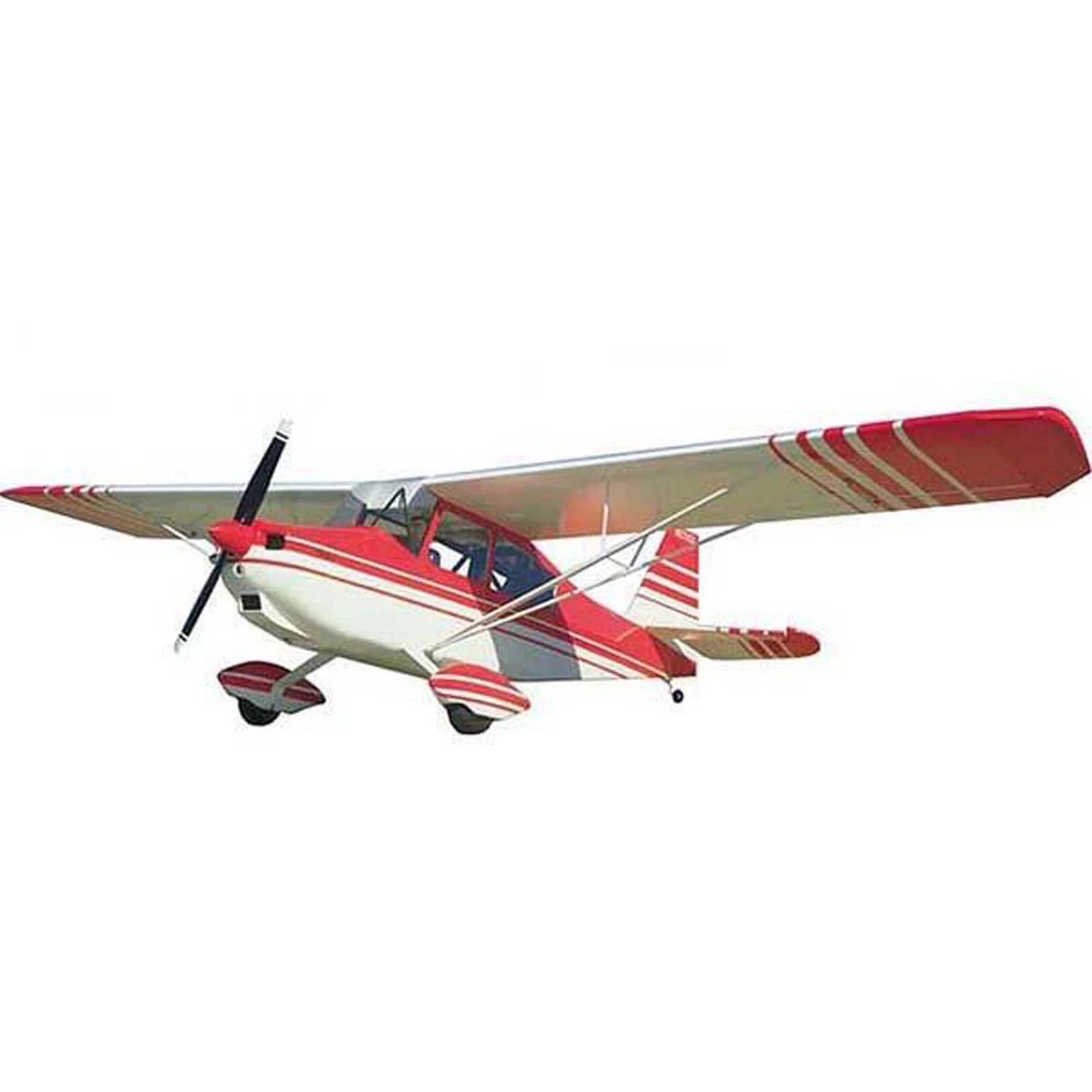
Itabria Kit
Original price was: $185.29.$98.99Current price is: $98.99.
- Safe Payments, Happy Customers
- Unbeatable Quality, Unbeatable Value
- 7 days return and exchange
- Elevate Your Shopping Experience

Features
- Exact Scale Outlines Of A Post-1974 Citabria
- Rugged Balsa/Ply Construction
- Strong One-Piece Wing Design
- Precision Die-Cut Formers and Ribs
- Molded Plastic Cowling & Wheel Pants
- Formed Aluminum Landing Gear
- Formed Tailwheel Wire
- Nylon Tail Wheel Bracket
- Engine Mounts
- Complete Hardware Pack
- Authentic Decals
- Scale 3-View Drawing
- Photo-Illustrated Assembly Manual
Overview
The Citabria can certainly be called this generation’s barnstormer. It’s role in general aviation for the past three decades, as a sport aerobatic trainer and an economical utility vehicle, is unequalled by any other recent production aircraft.The Citabria was introduced in the early 1960s by the Champion Aircraft Corp. as a sporty alternative for private pilots who wanted something different than an all-metal nosewheel airplane. It was a direct descendant of the venerable Aeronca Champ. By spelling “airbatic” backwards, they came up with the name Citabria. Sport fliers fell in love with the Citabria because, even though it had more horsepower and new aerobatic capability, it is still a sweet flying Champ at heart.
Features
Product Specifications
| Engine Size | 2-stroke .25 – .40 (4.1 – 6.5cc) OR 4-stroke .40 – .45 (6.5 – 7.3cc) |
| Product Length | 47″ (1194 mm) |
| Steering | Steerable tailwheel |
| Completion Level | Kit |
| Propeller Size | Varies with selected engine |
| Receiver | Sold Separately |
| Transmitter Range | Full range (transmitter not included) |
| Power Type | Glow |
| Servos | Sold Separately |
| Skill Level | Level 4 |
| Wingspan | 69″ (1753 mm) |
| Landing Gear | Main, one-piece prebent aluminum, tail, formed wire with nylon tail wheel bracket |
| Muffler Type | Stock muffler supplied with engine |
| Wing Area | 740 sq in (47.7 sq dm) |
| Product Weight | 7lbs (3175g) |
| Wing Loading | 21.8 oz/sq ft (66 g/sq dm) |
| Minimum Required Radio | 4-channel |
| Radio | Sold Separately |
| Material | Wood |
Be the first to review “Itabria Kit”
Related products
By Completion Level
Almost Ready-to-fly
By Completion Level

By Completion Level
By Completion Level
By Completion Level

Bind-n-fly
Reviews
There are no reviews yet.